1.0.0.0 1.0.0+481cbe8be1d5d92919655f5dab66624dcc1a7d91 AiNetProfit - v1.0.0+481cbe8be1d5d92919655f5dab66624dcc1a7d91 Ai No Data – Zero-Training AI™ Interactive Demos

Settings Zero-Training AI™ Demos

All examples are original and engineered to showcase real-world applications of Zero-Training AI™ that requires NO data and NO training to deliver real-time judgment, compounding decisions, and mathematically stable outputs.
Settings Budget Allocator

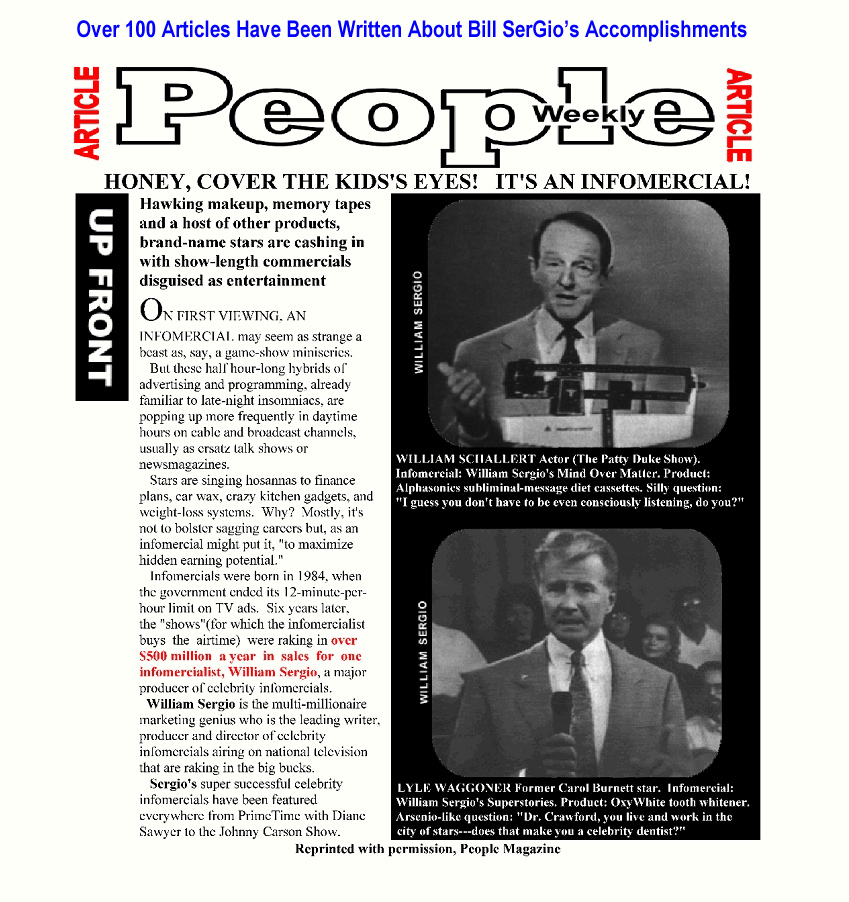
Automatically allocate a starting budget across hundreds of meda buys for Half Hours of television time for infomerrcials to maximize overall NET PROFIT.

Try Budget Allocator
Settings Drone Hover Stabilizer

A small quad-drone icon tries to remain level. You press buttons like Wind Gust, Tilt, and Disturbance, and the drone re-stabilizes instantly. Visual scaling represents relative control energy, not physical motion.

Try Drone Hover
Settings Robot Arm Balancer

A simple animated 2-joint “robot arm” tries to hold a target point. When user moves the target, the arm smoothly finds a stable configuration. No “machine learning”—just pure real-time control.

Try Robot Arm Balancer
Settings LLM Hallucination Eliminator

User types a prompt. Model outputs 5 candidate sentences. Zero-Training AI™ filters them and highlights the “safe, consistent, non-hallucinated” one.

Try LLM Token Governor


Zero-Training AI™ Logo

Zero-Training AI™ demonstrates how deterministic decision systems can operate without training data, datasets, or machine learning models. The systems shown here evaluate candidate actions in real time within a defined Decision Space, producing stable and explainable outcomes across multiple domains.


Future Direction – Comprehensive Applications of Zero-Training AI™

Zero-Training AI™ is a versatile foundation for any domain where constraints, objectives, and real-time response are critical. Below is a detailed overview of major applications, with descriptions and illustrative images.

1. Disaster Relief & Humanitarian Logistics (ReliefScope)

Optimizes truck/personnel/supply allocation from known inventories and real-time inputs (assessor reports, drone imagery, road status). Resolves maximal impact under hard constraints (fuel limits, priority levels, accessibility) in seconds — fully auditable for NGOs like the Red Cross.

Disaster relief drones coordinating with trucks and emergency teams

2. Home & Community Energy Management

Balances solar generation, battery storage, and household demand under physics-based constraints (weather forecasts, pricing, blackout prevention). Delivers cost savings and grid stability with zero historical training — perfect for off-grid or low-income homes.

Smart home solar battery system diagram with energy flow

3. Assistive Robotics & Prosthetics Control

Real-time joint/torque resolution for prosthetic limbs, exoskeletons, and mobility aids. Adapts instantly to user weight, terrain, or fatigue without retraining — emphasizing safety and smooth motion.

Exoskeleton robotic suit assisting paraplegic walking

4. Companion Robots & Emotional Support

Governs context-aware, affectionate behavior (touch timing, tone, gaze) in humanoid robots for elderly care and loneliness reduction. Enforces strict consent, safety, and consistency constraints — reliable and explainable.

Elderly person interacting warmly with companion robot

5. Personalized Education & AI Literacy Tools

Privacy-preserving adaptive curricula that sequence lessons from known prerequisites and attention limits — no data collection. Ideal for homeschooling, teaching real AI decision skills to kids in underserved communities.

Children learning AI and coding on laptops

6. Hospital & Public Health Resource Allocation

Optimizes beds, staffing, triage, and drug distribution under ethical, capacity, and urgency constraints. Provides auditable, real-time decisions for overwhelmed facilities or public health crises.

Hospital bed management dashboard with occupancy and wait times

7. Environmental Conservation & Wildlife Protection

Plans optimal drone patrol routes and resource deployment for anti-poaching and ecosystem monitoring using known animal behavior and terrain constraints.

Drone patrolling over rhino in wildlife reserve

8. Autonomous Vehicle Governance & Safety Layers

Serves as the deterministic "brakes and steering" overlay — enforcing safety, policy, and comfort constraints on top of perception models in real time.

Autonomous vehicle architecture diagram with safety layers

9. Smart Grid & Renewable Energy Balancing (GridZero)

Dynamically balances solar/wind input, battery charge/discharge, and demand under strict physics constraints (voltage stability, line limits, no blackouts) using only real-time measurements and known grid equations — no historical load profiles or learned forecasting models required. Ideal for microgrids, off-grid communities, and utility-scale renewable integration where explainability and guaranteed stability matter most.

Diagram of renewable energy grid with real-time deterministic balancing

10. Large-Scale Field Service & Preventive Maintenance Routing

Schedules and routes hundreds of technicians across cities/regions over weeks/months while respecting technician skills, travel time, vehicle capacity, priority SLAs, and hard time windows — all deterministically resolved from current constraints without training on past tickets. Used by utilities, telecoms, and facility management firms to minimize downtime and travel costs at massive scale.

Technicians on map with optimized multi-week routing paths

11. Critical Infrastructure Safety Governor (FailSafe Layer)

Acts as a deterministic overlay on any autonomous or semi-autonomous system (drones, vehicles, industrial robots, power plants) — instantly enforces hard safety invariants, ethical boundaries, and regulatory constraints in real time even when perception/ML layers produce uncertain outputs. Guarantees "never violate X" properties mathematically.

Safety overlay architecture enforcing constraints on autonomous system

12. Crisis Hospital Resource & Triage Resolver

In mass-casualty or pandemic surge scenarios, instantly re-allocates ventilators, ICU beds, staff, and medications across patients/units under ethical priority rules, capacity hard-limits, and urgency scores — fully auditable and deterministic so decisions can be reviewed and trusted by medical boards.

Hospital command center dashboard resolving resource allocation in crisis

These applications are not exhaustive — the framework is domain-agnostic and can be adapted rapidly to new problems where structure is known and determinism is essential. Ongoing development focuses on open-source expansion, more live demos, and community contributions.

Conclusion

Zero-Training AI™ proves that intelligence does not require massive datasets, retraining cycles, or opaque inference. When constraints and objectives are explicit, optimal decisions can be resolved mathematically — reliably, explainably, and in real time.

The future of this work is collaborative and open — let's build deterministic intelligence that benefits everyone.